
Bollywood, Hollywood, and OTT spend on OOH harder than almost any other category because of one structural fact: a film or show release is date-locked, and you cannot retarget an audience that missed the opening weekend. The launch either lands or it doesn't, and the brand only gets one shot. That fact alone explains why Yash Raj, Dharma Productions, Reliance Entertainment, Sony Pictures India, T-Series, Excel Entertainment, Maddock Films, Netflix India, Disney+ Hotstar, Amazon Prime Video, JioCinema, Zee5, and SonyLIV in India, and Marvel/Disney, Warner Bros Discovery, Universal, A24, Lionsgate, Paramount, Netflix, Apple TV+, and Max in the USA, all over-index on OOH spend in launch windows. The Out of Home Advertising Association of America (OAAA) publishes broader entertainment and category spend data for anyone comparing this against other launch-driven categories.
Short version. A big Bollywood release spends ₹3 to ₹15 crore on OOH compressed into 4 weeks. A major OTT show launch in India spends ₹15 to ₹40 crore across 8 to 12 weeks. A Hollywood blockbuster spends $20 to $80 million globally on OOH, with $10 to $40 million in the US alone. Cinema slides at PVR and AMC run ₹15,000 to ₹35,000 per screen per week and are a critical cross-promotion layer. The category's defining habit is premium LED saturation at multiplex approaches during release week, because the buyer is literally about to walk into the building where the product is sold.
This guide covers the countdown calendar, the inventory targets, the Bollywood-Hollywood-OTT differences, and a worked ₹40 lakh OTT series launch across Mumbai, Bangalore, and Delhi.
Why films and OTT are structurally OOH-heavy
Three reasons stand out.
Date-locked release. A film opens on a Friday. The opening weekend box office is set by Sunday evening. If awareness is not at peak by Thursday, the film leaves money on the table that cannot be recovered. OOH compresses awareness into the exact window. Digital can be retargeted; release dates cannot.
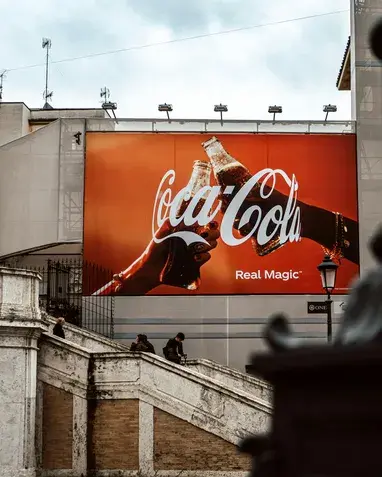
Visual product. Posters, key art, and motion frames are designed for big-format display. A 60x20 hoarding of a Marvel character or a Yash Raj heroine in a saree shows the production value at the scale the studio paid for. Phone-sized creative loses 80 percent of that craft.
Word of mouth multiplier. The first 48 hours after release determines the trajectory. Buzz needs to be primed, not generated, by Friday. OOH plants the name in the audience's head so that when a friend says "have you seen X" the recognition is instant.
The 4-week countdown calendar
Almost every Bollywood and Hollywood release runs this calendar. OTT is similar but stretched.
Week minus 4: name and date
Single key visual, film or show name, release date. Sometimes only a logo and a date. The point is to start the social conversation and seed recognition.
Spend in this phase: 15 to 20 percent of launch OOH budget. Anchor hoardings only.
Week minus 3: full creative
Hero shot, cast credits, director credit, trailer drop coincides with this week. The creative density goes up significantly.
Spend in this phase: 20 to 25 percent. Anchor hoardings plus first wave of premium LED at metro junctions.
Week minus 2: reception layer
Critical reception or festival buzz added if positive (Cannes, TIFF, IFFI). Star quotes. Influencer screenings. Trailer view count milestones.
Spend in this phase: 25 percent. Adds transit panels, mall LEDs, and cinema slides.
Release week
Maximum saturation. Premium LED at every multiplex approach. Metro panels at peak frequency. Airport hoardings, mall LEDs, multiple cinema slide inventory.
Spend in this phase: 35 to 40 percent. The single highest-spend week of the cycle.
OTT extends this calendar. Netflix India's Heeramandi and Sacred Games ran 8-week pre-launch with the same beat structure stretched, plus a 4-week sustain phase after launch if the show was performing.
The premium LED play at multiplex approach
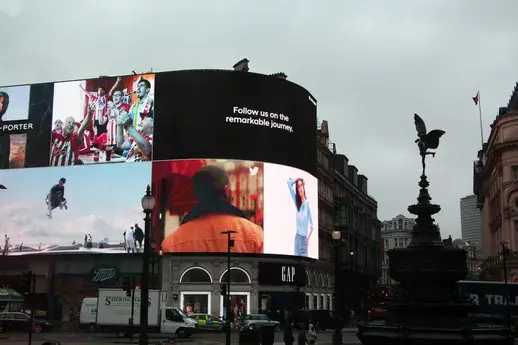
This is the part of movie OOH outsiders rarely realise is so concentrated. The hoarding 200 metres from PVR Vasant Vihar in Delhi, INOX Phoenix Marketcity in Mumbai, or AMC Lincoln Square in New York is worth more than ten hoardings on a suburban highway. The buyer is literally about to enter the building where the product is sold.
Premium LED at multiplex-adjacent locations in metros typically rents at ₹4 to ₹15 lakh per month in India and $15,000 to $80,000 per month in major US markets. Studios book these aggressively in release week and route the budget there rather than spreading thin.
Yash Raj's Pathaan release saturated PVR Saket and PVR Director's Cut approaches. Christopher Nolan's Oppenheimer release saturated AMC Lincoln Square and Empire 25 IMAX approach. The pattern is universal.
Cinema slides: the highest-intent OOH layer
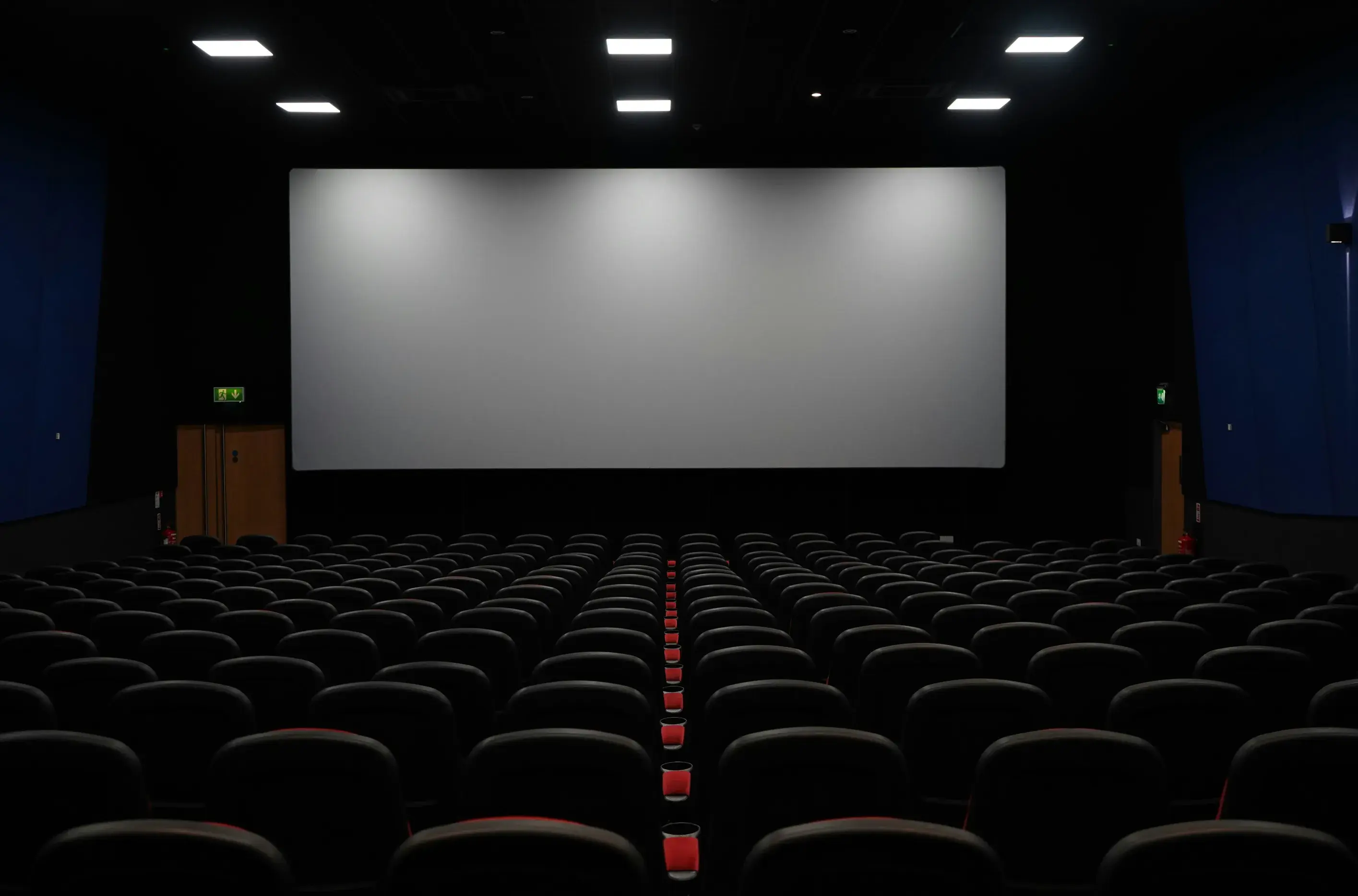
A cinema slide is a 10-second still that runs in the pre-show loop before the trailer reel. Studios cross-promote their next release in this loop. The audience is already in a cinema seat, has 8 to 20 minutes of dwell time, is biased toward enjoying movies, and is the exact demographic that buys movie tickets.
Indian pricing: ₹15,000 to ₹35,000 per screen per week at PVR and INOX. A 200-screen pan-India one-week slide run costs ₹30 to ₹60 lakh. US pricing: $400 to $800 per week per screen at AMC, Regal, Cinemark. A 300-screen one-week run costs $120,000 to $240,000.
Cinema slides are the single highest-intent OOH layer for movie launches. Almost every studio uses them. Many OTT launches now use them too, treating cinema audiences as the warm-up for the next big show drop.
OTT shows: the changed pattern
Netflix India, Prime Video India, Disney+ Hotstar, JioCinema, Zee5, and SonyLIV have each become major OOH spenders in the last six years. The structural difference from film:
OTT shows are available indefinitely after release, not for one weekend. So the launch window stretches to 8 to 14 weeks of OOH rather than 4.
The creative tilts toward character intrigue rather than name-cast. Netflix's Heeramandi led with character costumes and tone, not just star names. Prime Video's Citadel led with the espionage tone.
The OOH layer often outspends TV in the launch month. Netflix India in particular has made OOH its lead awareness channel for tentpole launches.
Hollywood OTT (Apple TV+, Max, Hulu, Netflix US) follows a similar 8 to 12 week window with much higher absolute spend. Apple TV+ spent an estimated $15 million on OOH alone for the Severance season 2 launch.
The Bollywood-Hollywood spend pattern differences
Bollywood concentrates spend in Mumbai, Delhi NCR, Bangalore, Hyderabad, Chennai, Pune, Ahmedabad, Kolkata, and the major tier 2 cinema cities. A big-ticket Hindi release covers 18 to 25 cities with anchor hoardings.
Hollywood concentrates spend in NYC, LA, Chicago, Atlanta, Houston, Boston, DC, San Francisco, Seattle, Miami, Dallas. A big-ticket US release covers 30 to 40 cities, with NYC and LA absorbing 30 to 40 percent of total US OOH spend on a major release. Detroit, where AdTown has its deepest USA inventory, is a strong Tier-2 cinema market with significantly lower OOH costs than NYC or LA, which makes it a strong-value market for mid-tier releases.
Bollywood spend per release tops out around ₹15 crore for the biggest releases (Pathaan, Animal, Jawan). Hollywood spend per blockbuster runs $20 to $80 million globally, with $10 to $40 million in the US alone.
Worked example: OTT series launch in Mumbai, Bangalore, Delhi
Platform: a major OTT player launching an 8-episode tentpole drama. Budget: ₹40 lakh across an 8-week launch window in three cities.
Spend plan:
- Three anchor hoardings, one each in Mumbai (Bandra Linking Road), Bangalore (Outer Ring Road), Delhi (NH-8 Gurgaon approach): ₹2,40,000 per month average across three boards, two months = ₹14,40,000.
- Premium LED at three multiplex approaches (PVR Phoenix Marketcity Mumbai, PVR Forum Bangalore, PVR Saket Delhi), three-week saturation in release weeks 1 to 3: ₹4,50,000 per LED for three weeks each, ₹13,50,000 combined for three weeks.
- Cinema slides at 80 screens across the three cities for two weeks (release week and plus 1): ₹25,000 per screen per week, two weeks = ₹40 lakh divided across 80 screens means roughly ₹2,50,000 actually fits this budget. Recalibrate: 25 screens at ₹25,000 per week, two weeks = ₹12,50,000. Rework against the total.
Realistic ₹40 lakh shape:
- One anchor hoarding in each of the three cities, 60 days each: ₹2,20,000 per month per anchor, three cities, two months = ₹13,20,000.
- One premium LED per city at multiplex approach, three weeks of release: ₹2,80,000 per LED per three weeks, three cities = ₹8,40,000.
- Mall LED screens at five premium malls (Phoenix Mumbai, Forum Bangalore, DLF Mall of India Noida, Inorbit, Mantri): ₹40,000 per screen per month, two months = ₹4,00,000.
- Metro panel network across Mumbai and Delhi metros for four weeks: ₹3,80,000.
- Cinema slides at 30 screens across the three cities for two weeks: ₹15,00,000? Too much. Rebalance to ₹6,00,000 (10 screens at three cities, two weeks at ₹20,000 average).
- Transit and airport hoardings sustain layer: ₹2,60,000.
- Printing, monitoring, contingency: ₹2,00,000.
Total: ₹40,00,000.
Expected outcome: 35 to 60 lakh impressions across the launch window in the three cities, dominant share-of-voice in release week, and an estimated 18 to 28 percent lift in show-search volume during the release week over a baseline launch without OOH. For a tentpole that targets 20 to 40 lakh first-month viewers, the OOH layer typically contributes 8 to 14 percent of that audience by AdEx category benchmarks.
How film OOH interacts with TV and digital
Films and OTT rarely run OOH alone. The classical stack:
OOH for awareness and anticipation. TV for emotional trailer placement and reach to over-45 audiences. Digital (YouTube, Meta, Instagram) for trailer views, retargeting, and ticket-purchase actions. Influencer for buzz inside the audience's friend circles.
The OOH layer is structurally the one that puts the name in the cultural background. The digital and TV layers convert that recognition into clicks and tickets. The two cannot substitute for each other. For more on how OOH interacts with broader media planning, what is OOH advertising covers the multi-channel math. And for the underlying premium LED rates in India see the billboard cost India guide.
The category's adjacent neighbour, automotive launches, runs an almost identical date-locked structure, covered in OOH advertising for automotive launches.
Common movie OOH mistakes
Skipping the tease week minus 4. Releases that go straight to full creative in week minus 3 lose the social runway. The single-image teaser is what builds the anticipation curve.
Under-investing in cinema slides. They are the highest-intent layer and the cheapest premium OOH per actual ticket-buying impression. Many studios still under-buy here.
Spreading too thin across cities. A pan-India release with anchor hoardings in 25 cities but no saturation anywhere is worse than the same budget concentrated in eight cities at saturation density.
Cutting OOH after Friday. If the film holds in week 2, sustain OOH is cheap continuation insurance. Many studios drop spend after Friday and underperform their sustain phase.
Where AdTown fits
Browse anchor hoardings, premium LED at multiplex approaches, transit panels, mall LEDs, and cinema slide inventory across Mumbai, Delhi NCR, Bangalore, Hyderabad, Chennai, and growing US markets at /listings. The marketplace is built for the tactical regional layer that even big studio campaigns end up sourcing outside the main agency, where the 15 to 22 percent markup on a high-rate LED unit translates into real money. Free for advertaisers and owners for the first six months while we launch.
Film and OTT will remain the most OOH-dependent category in entertainment for as long as releases are date-locked and stories are visual. The 4-week countdown calendar has run almost unchanged for two decades. The only thing that has changed is who buys the inventory and at what markup.
See real prices in your city
Browse billboards, indoor screens, transit, cinema slots and more. Every listing shows the price, the location, and the photos upfront. No quotes, no salesperson.
Browse listingsFrequently asked questions
Three structural reasons. Films open on a fixed date, you cannot retarget Friday's audience on Saturday. The product is visual, posters and motion frames are designed for big format. And word of mouth in the first 48 hours determines the box office, so peak awareness has to land in the same week as release. Yash Raj, Dharma, Reliance Entertainment, Sony Pictures India, and T-Series each spend ₹3 to ₹15 crore on OOH per big-ticket Bollywood release in India. The same date-locked logic drives Hollywood, OTT, and regional cinema spend.
Four weeks countdown is standard. Week minus 4: poster reveal, name and date, single key visual. Week minus 3: full creative with cast and director credits, trailer release coincides. Week minus 2: critical reception or festival buzz line added if positive. Week of release: maximum spend, premium LED at multiplex approaches saturated, transit and metro panels at peak frequency. Sustain phase weeks plus 1 to plus 4 only if the film holds at the box office or the OTT show gets traction. Netflix India, Prime Video, Disney+ Hotstar, and JioCinema follow a similar pattern for major show launches.
OTT runs longer launch windows because the show is available indefinitely after release, not for one weekend. Netflix India, Prime Video, and Disney+ Hotstar typically run OOH from week minus 3 through plus 6 on hit shows, sometimes plus 12 for tentpole series. The creative also tilts toward character intrigue rather than name-cast. The Bear, House of the Dragon, Sacred Games, Scoop, and Citadel all saw 8 to 14 week OOH cycles in their respective markets. Spend per OTT tentpole launch in India typically runs ₹8 to ₹40 crore, USA $5 to $25 million.
Premium LED at multiplex approaches first. The hoarding 200 metres from PVR Vasant Vihar or AMC Lincoln Square is worth more than ten hoardings on a suburban highway because the buyer is literally about to walk into the building where the product is sold. After that, premium LED at major junctions in target metros, transit panels at metro stations and rail terminals, premium airport hoardings, mall LED screens, and cinema slide cross-promotion. The category is unusually concentrated on premium high-frequency inventory because the 4-week window cannot tolerate slow-burn placements.
A tentpole launch from Netflix India, Prime Video India, Disney+ Hotstar, JioCinema, or SonyLIV typically spends ₹15 to ₹40 crore on OOH across an 8 to 12 week launch window. A mid-tier show launch spends ₹4 to ₹10 crore. A smaller launch spends ₹1 to ₹3 crore. The biggest single spends in recent years came from JioCinema's IPL launch (cross-category sport plus entertainment), Netflix's Sacred Games and Heeramandi, and Prime Video's Citadel. OOH frequently outspends every other channel including TV in the launch month.
Both. Cinema slides at PVR, INOX, Carnival, and Cinepolis are an OOH format inside other movie audiences. Studios cross-promote their next release as a slide before the current release. ₹15,000 to ₹35,000 per screen per week. A pan-India 200-screen slide run for one week costs ₹30 to ₹60 lakh. Hollywood does the same at AMC, Regal, and Cinemark. The format is unique because the audience is already in a cinema seat, has 8 to 20 minutes of dwell time, and is biased toward enjoying movies. Highest-intent OOH placement in the category.