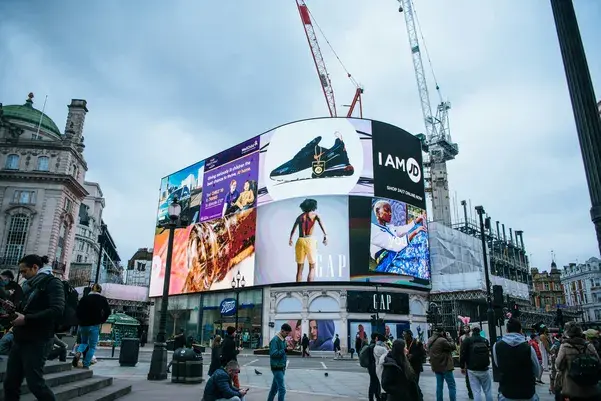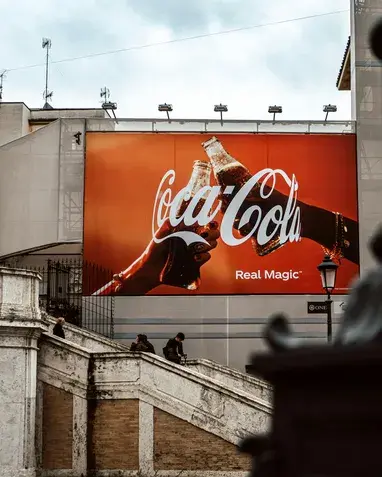

If you run a small business and you've ever looked up at a hoarding and wondered what it would cost to put your face on it, here's the honest answer: a standard billboard in an Indian metro runs between roughly ₹50,000 and ₹4,00,000 per month. Tier 2 cities start lower, around ₹20,000 to ₹80,000. Premium LED screens at high traffic junctions go higher, sometimes much higher. And there's a whole tier of cheaper outdoor and in-venue formats most first time advertisers don't even know exist, with real, bookable campaigns now starting from as little as ₹500 to ₹600 a month for a single standee or poster inside a busy local venue.
That's the headline. The rest of this guide breaks it down by city, by format, and by what you actually get for the money. No agency markup, no "request a quote" runaround. If you want the category basics before the city-by-city numbers, Out-of-home advertising covers the format history and how OOH buying works globally.
What you're actually paying for
A billboard rate is four things rolled into one number.
- Location footfall. Traffic counts at the unit. A site on the Western Express Highway in Mumbai pulls in roughly 3 to 5 lakh impressions a day. A site on a residential feeder road might do a tenth of that.
- Size. The standard sizes you'll see quoted are 20x10 feet, 30x20, 40x20, and 60x20. Bigger is more, obviously, but the jump isn't linear. A 40x20 doesn't cost twice a 20x10. It usually costs three to four times as much because the bigger units are at the bigger sites.
- Format. Static vinyl is the cheapest. Backlit and frontlit are mid-tier. LED screens are the most expensive per day, but they let multiple advertisers share a loop, so the per-spot cost can actually be friendlier for SMBs.
- Duration. Most rates are quoted for 14 day or 30 day cycles. Shorter than 14 days and the pasting cost eats your budget. Longer than 30 days and you should ask for a discount.
When you see a number on AdTown, that number includes the unit rent, the printing of the flex, and the pasting. Production fees aren't hidden in a separate invoice. Compare that to the agency quote you'll get, where production sits in a footnote.
City by city ranges in 2026
These are typical ranges for a 30 day cycle on a standard size unit, mid-tier location. Premium A+ sites cost more. Tier 2 areas inside the same city cost less.
Mumbai: ₹80,000 to ₹4,50,000 for a 30x20 hoarding. LED screens at junctions like Bandra, Andheri, or Worli can hit ₹6,00,000+ per month for prime time loops.
Delhi NCR: ₹70,000 to ₹3,80,000 for a comparable unit. South Delhi and Gurgaon are the priciest pockets. Faridabad and parts of Ghaziabad are noticeably cheaper.
Bangalore: ₹60,000 to ₹3,20,000. The Outer Ring Road, Indiranagar, and Whitefield are the premium zones. LED inventory has grown a lot in the last two years.
Hyderabad: ₹45,000 to ₹2,60,000. HITEC City and Banjara Hills sit at the top. Older Hyderabad areas are far more affordable per impression.
Chennai: ₹40,000 to ₹2,40,000. OMR and the Anna Salai corridor are the high-spend zones.
Tier 2 cities (Pune, Jaipur, Lucknow, Ahmedabad, Kochi, Indore): ₹20,000 to ₹1,20,000 for similar inventory. The same ₹50,000 budget that buys you a side-street unit in Mumbai gets you a main-road unit here.
These are 2026 working ranges. Individual sites vary. Browse /listings to see live prices.
What about cheaper outdoor formats
If billbords sound out of reach, you have other options that work just as well for a small business with a local catchment.
- Standee or poster placements inside local venues. This is the cheapest bookable option and the newest. Everyday businesses with footfall, badminton courts, gyms, cafes, salons, barber shops, gaming zones, coaching centres, now list a small spot you can rent: a standee near the entrance, a poster on a wall, a card on the counter. Rates start from around ₹500 to ₹600 a month per placement. Rent a few around your catchment and you've got a neighbourhood presence for under ₹2,000 a month, with each venue's footfall and price shown upfront.
- Cinema slide ads. Single-screen single-slide insertions at PVR and INOX through aggregators can run in the few-thousand-rupee range for short on-screen tests, but a proper monthly multi-screen campaign typically starts around ₹1,50,000 in metros and ₹1,50,000 to ₹3,00,000 across smaller cities. You buy a 10-second still that runs in the pre-show loop. For a neighbourhood restaurant or a coaching class with a budget that can stretch to a one-month run, this is hard to beat for cost per attentive eyeball.
- Salon and gym screen networks. Indoor LCD screens at salons and gyms in your pin code, sold in 14 day or 30 day cycles, often ₹6,000 to ₹25,000 per month per cluster. Great for D2C brands and local services.
- Transit (bus and auto). Bus back panels and auto hoods in metros run around ₹3,000 to ₹12,000 per vehicle per month. Buy ten and you've blanketed a 5km radius for the cost of a small social media campaign.
- Kirana and counter posters. Very small format, very local, very cheap. Useful for hyperlocal services like a dentist or a tuition centre.
The point is: the word "billboard" is the most visible part of OOH but it isn't always the right starting point. A barber shop in Lokhandwala probably gets more foot traffic from a ₹15,000 cluster of auto hoods around Andheri West than from a ₹1,50,000 hoarding on the highway. Match the format to the catchment.
A real example
Let's say you run a 12-chair barber shop in HSR Layout, Bangalore. Your catchment is roughly a 3km radius. Your goal is two new customers a day.
A 30x20 hoarding on the Outer Ring Road would cost you around ₹2,80,000 for a month, and most of those impressions would be people driving past who'll never come to your area. Wrong tool.
What works instead: ₹40,000 split across an LED screen at an HSR mall (₹15,000), 20 auto hoods running locally for 30 days (₹15,000), and PVR slide ads at the nearest two screens for two weeks (₹10,000). Total budget under a third of the hoarding number, dramatically more relevant impressions, much better odds of those two new customers a day.
This is the kind of mix the bigger outdoor agencies won't even quote you, because it's too small for them to bother with. It's exactly what AdTown is built for.
How to keep from getting overcharged
A few things to know before you book anything, anywhere.
- Always ask for the unit code or PIN-code-level location. If a vendor refuses, walk away. Real inventory has a real address.
- Insist on photos with the date stamp. If the photo is from 2022 the unit might be hoarded over by now.
- Get the impressions number in writing. "High traffic" is not a number.
- Compare the all-in price. Some vendors quote rent only and slide printing onto the invoice later.
On AdTown, all of that is on the listing page by default. Price, photos, location, impressions estimate, included production. Click /listings and filter by your city. If you've never bought outdoor before, that's the fastest way to feel out the market without anyone trying to sell you anything.
So what should you spend
If you are launching a new local service and you've never advertaised outdoors before, start with ₹15,000 to ₹40,000 across two formats for 30 days. Run something measurable, like a discount code or a phone number that only appears on your OOH creative. After 30 days you'll know if the channel works for your business, and you'll know which format pulled the weight. Scale from there.
If you sell something with a wider catchment, like a real estate project or a hospital, then yes, look at proper billboards. Use the city ranges above as your sanity check. Ignore any quote that doesn't show you the unit's location and photo upfront.
Outdoor advertising in India is not as expensive as agencies have spent decades implying. It just used to be hard to access without one. That part is changing. If you're curious which agencies dominated this market and why most advertisers can skip them now, the top billboard agencies in India guide covers the names that matter. Browse open inventory across every Indian metro at /listings and book directly, at the price you see. Built for advertisers of every size: SMBs running their first campaign, lean brand teams at larger companies, brand managers wanting to skip the agency layer.
See real prices in your city
Browse billboards, indoor screens, transit, cinema slots and more. Every listing shows the price, the location, and the photos upfront. No quotes, no salesperson.
Browse listingsFrequently asked questions
A standard hoarding in a metro like Mumbai or Delhi typically runs between ₹50,000 and ₹4,00,000 per month for a 14 day or 30 day cycle, depending on size, lighting, and location. Tier 2 cities like Pune, Jaipur, or Lucknow start lower, often ₹20,000 to ₹80,000 per month. LED screens cost more. Smaller formats like cinema slides, transit posters, or salon screens start at a fraction of that.
The lowest entry point now is a standee or poster placement inside a busy local venue like a cafe, gym, badminton court or salon, starting from around ₹500 to ₹600 a month per spot. After that come auto rickshaw hood panels at around ₹3,000 a month per vehicle, kirana store posters at ₹2,000 to ₹5,000 for a 1km radius, and indoor LCD screens at salons and gyms at ₹6,000 to ₹25,000 a month per cluster. Cinema slide ads cost more than people think, with proper monthly campaigns at PVR and INOX usually starting around ₹1,50,000.
No. Agencies add a 15 to 25 percent markup and usually have minimum spends that lock out small businesses. Marketplaces like AdTown let you see the rate, see the location, and book directly. You handle your own creative, or use any local designer.
Four things drive it. Footfall and traffic at the location. Size of the unit. Whether it is lit or LED. And how long you book it for. A 20 by 10 unlit hoarding on a feeder road costs a fraction of a 40 by 20 LED on a highway junction. Always ask for the impressions estimate, not just the rate.
With agencies and brokers, yes, often heavily. With transparent marketplaces, the listed price is usually already the booking price. The trade off is convenience. If you don't want to spend two weeks haggling, pay the listed rate and move on.
14 days is the practical minimum to be remembered. 30 days is the sweet spot for a small business launching something new. Anything shorter mostly just burns money. If your budget can't cover 14 days, switch to a cinema slide or a smaller indoor format and use the saved money on more frequency.