
If you've Googled "billboard cost USA" you've probably seen the Times Square number and panicked. Forget it. That number is for a tiny handful of trophy locations bought by global brands for PR. What an actual small business pays in an actual American city looks completely different.
Here's the short version. A static billboard in a small US market starts at around $250 to $1,500 a month. A digital billboard in the same market runs $700 to $2,500 a month for a share of rotation. In a major metro like NYC, LA or Chicago, a four-week campaign on AdQuick-style inventory typically lands between $3,500 and $25,000 depending on the screen and zone. If you just want to dip a toe in, programmatic platforms like Blip will run a small test from around $50.
The real number you pay depends on three things: city, format, and how long you book for. Let's break it down properly. The Out of Home Advertising Association of America (OAAA) publishes broader US industry rate and spend data if you want the national picture first.
What drives billboard pricing in the USA
Four levers move the price more than anything else.
Traffic count is the biggest one. Daily Effective Circulation (DEC) is the standard impressions metric and most owners price off it. A board on an interstate with 80,000 cars a day costs many times more than the same size board on a residential arterial.
Format matters next. Static vinyl is cheaper to install and rent. Digital screens cost more per month but split rotations across multiple advertisers, so your share might be 1/8 of the time on a $20,000 screen rather than the whole thing.
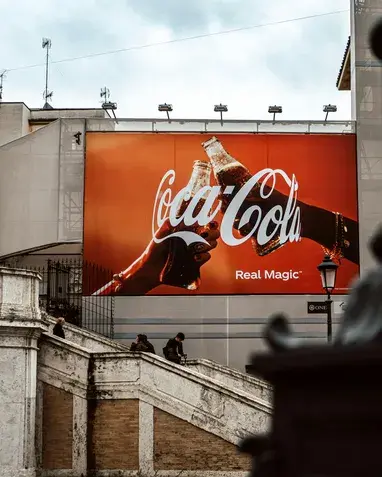
Location prestige adds a premium that has nothing to do with impressions. Times Square, Sunset Strip, the Vegas Strip, downtown Chicago, all have a "tax" baked in.
Booking length is the hidden one. Four-week buys are the standard. Twelve-week buys often get you 10 to 20 percent off per month. Annual deals on a static board can drop the monthly rate by half.
City by city: what SMBs actually pay
New York City
The trophy units in Times Square are $14,000 to $50,000+ for four weeks. Skip them. Outer-borough digital screens (Queens, Brooklyn, Bronx commute routes) run more like $4,000 to $12,000 for four weeks. Static bulletins on bridge approaches and BQE-adjacent locations sit in a similar range. NYC is expensive but the gap between trophy and useful is huge.
Los Angeles
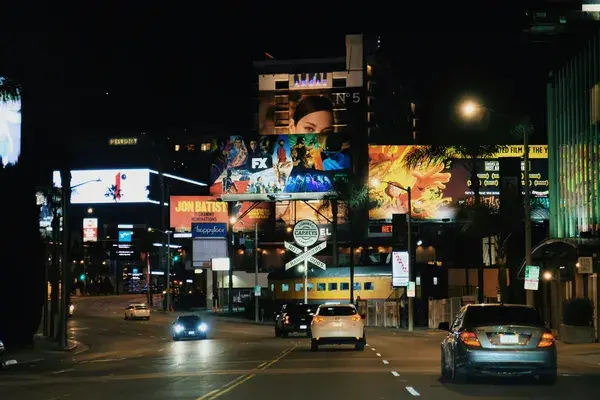
LA pricing is all about which freeway. The 405, 101, and 10 attract premium rates. A digital bulletin on a busy LA freeway might run $5,000 to $18,000 for four weeks. Side-street digitals in Burbank, Glendale, Pasadena come down to $2,500 to $6,000. Sunset Strip is its own market, treat it like Times Square and only buy it if the PR value matters.
Chicago
Chicago is one of the friendlier major US markets for SMBs. Digital boards on the Kennedy, Eisenhower, and Dan Ryan run roughly $3,500 to $15,000 for four weeks. Neighborhood static bulletins in Wicker Park, Logan Square, or Evanston sit at $1,500 to $4,000 a month. There's deeper inventory here than in NYC or LA, which means more competition and better rates.
Houston
Houston is sprawling and cheaper than the coasts. Digital bulletins on the 610 Loop and I-10 typically run $2,500 to $10,000 for four weeks. Static units start around $1,000 a month. Because the city is so spread out, advertaisers usually need two or three boards to cover a target audience properly. Plan for the multiplier.
Atlanta
Atlanta hits a sweet spot for mid-budget SMBs. Digital bulletins on I-285, I-75, and the Connector run $3,000 to $9,000 for four weeks. Buckhead and Midtown specifically command higher rates. Suburban static in Marietta, Alpharetta, Decatur is $800 to $2,500 a month. A new pizza spot opening in suburban Atlanta can realistically run a meaningful billboard campaign for under $1,500 a month.
Detroit
Detroit is one of the best-value major markets in the country. Digital bulletins on I-75, I-94, and the Lodge run $1,800 to $6,500 for four weeks. Static is even friendlier, often $500 to $1,800 a month. Royal Oak, Birmingham, Ferndale all have walkable neighborhood inventory in the $400 to $1,200 range. Our USA partner is based in Detroit, which means the inventory we list there is unusually deep.
Small and Tier 2/3 markets
This is where billboard advertising gets genuinely cheap. Think Toledo, Knoxville, Boise, Des Moines, Greenville, Spokane. Static bulletins from $250 to $900 a month. Digital from $700 to $2,000 a month. If you run a regional service business or a local franchise, these markets can deliver better cost per impression than any digital platform.
The $50 starting point
Worth singling out, because $50 a month now buys two very different things. The first is the programmatic test: Blip and similar platforms let you set any budget you want and your ad shows on screens until the budget runs out. Fifty dollars gets you a couple hundred plays across maybe a dozen screens. It's not a campaign, it's a test. You see the ad in real life, you learn whether your creative reads at distance, you find out which screens you want to book properly.
The second is newer and, for a lot of local businesses, more useful: a standee, poster or counter card inside a busy local venue. Cafes, gyms, salons, barber shops, sports courts and other footfall spots are now listing small placements you can rent for about $50 a month. Instead of a few hundred rotating plays on a roadside screen, you get a full month in front of the same local crowd who walk into that venue. Rent a handful around your neighborhood and you've built a real local presence for the price of one mid-tier digital screen. Most first-time billbord buyers should start with one of these two before doing anything bigger.
Worked example: a small bakery in Atlanta
Sweet Auburn Bakery wants to drive weekend foot traffic. Budget: $1,200 a month. Plan:
- One suburban digital screen on a feeder route into Decatur. $850 for four weeks, 1/8 rotation, roughly 180,000 impressions over the month.
- Two static posters on Decatur's main strip. $300 a month combined.
- $50 Blip test on screens around the actual neighborhood to see which one performs.
Total: $1,200. Real impressions in the high six figures. Compare that to spending the same budget on Meta ads where the same audience scrolls past 47 other restaurants and you start to see why OOH still works.
How to shop without overpaying
Three rules.
Get pricing from at least three sources. Direct from the owner, an agency quote, and a transparent marketplace. The spread will tell you who's marking up.
Don't pay agency-style markups for a single board. The 15 to 25 percent middleman fee on outdoor only makes sense if you're running coordinated multi-market plans.
Look at cost per thousand impressions (CPM), not the headline price. A $4,000 board with 2 million monthly impressions ($2 CPM) beats a $1,500 board with 200,000 impressions ($7.50 CPM) every time.
Browse what's actually available in your city on /listings?type=billboard. For deeper context on whether OOH is even the right choice for your business, check billboard vs Instagram ads for small business. And if your budget is genuinely tight, the cheapest ways to advertise locally covers options under $200 a month.
You don't need to spend Times Square money to be on a billboard in 2026. You just need to look at the right inventory in the right city and skip the people standing between you and it. For context on the big USA media owners and agencies, see the top billboard agencies in the USA guide. For the structural explanation of why marketplaces now beat agency buys for most advertisers, SMBs and brand teams alike, the outdoor advertising marketplace guide walks through the booking flow end to end.
See real prices in your city
Browse billboards, indoor screens, transit, cinema slots and more. Every listing shows the price, the location, and the photos upfront. No quotes, no salesperson.
Browse listingsFrequently asked questions
Two options start at around $50. Programmatic platforms like Blip let you run a small digital billboard test where your ad rotates across screens until the budget is spent. Or, for about $50 a month, you can rent a standee or poster inside a busy local venue like a cafe, gym or salon, which puts you in front of the same local crowd for a full month. Both are the cheapest ways to get started before committing to a four-week billboard buy.
In a small or mid-size market you can find static billboards from roughly $250 to $1,500 a month. Digital billboards in the same markets typically run $700 to $2,500 a month for a share of rotation. Highway-facing units cost more than side-street ones, and traffic count is the biggest single factor in price.
Times Square pricing reflects pedestrian density, tourist photography, PR value, and brand prestige, not just impressions. A premium spot there can run $14,000 to $50,000+ for four weeks. Almost no SMB needs that. A neighborhood digital screen on a busy commute route delivers more relevant impressions for one tenth the cost.
Often yes for short campaigns, because you share the screen rotation with five to eight other advertisers instead of owning it 24/7. For long campaigns, static can work out cheaper per day. Digital also lets you change creative mid-flight, which static cannot. Pick based on campaign length and how often you want to update the message.
Yes. Marketplaces and self-serve platforms now let advertisers book directly. You skip the 15 to 25 percent agency markup and see real prices upfront. AdQuick uses a quote-and-shortlist flow for many buys, Blip runs a programmatic-auction rotation across screens, and AdTown is the only true direct-booking marketplace where you see the listing and click to book the specific board, like Airbnb for ad spaces. For most SMBs, lean brand teams at larger companies, and even many mid-sized brands tired of the agency model, this is the simpler, cheaper route.