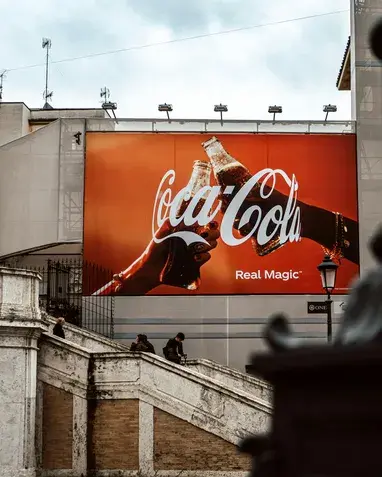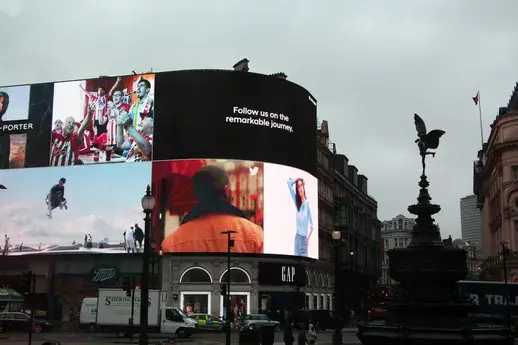

FMCG is the steadiest, most disciplined, longest-running OOH category in advertaising globally. HUL, ITC, Nestle India, Britannia, Parle, Coca-Cola India, PepsiCo India, Dabur, Marico, and Patanjali in India, and Procter & Gamble, Unilever, Coca-Cola, Pepsi, Mondelez, Kraft Heinz, General Mills, and Mars in the USA, between them spend a combined estimated ₹2,500+ crore a year and $4 to $6 billion globally on outdoor. They do not run launches the way a Tata Curvv runs a launch. They run a permanent presence in the background, with seasonal heavy ups layered on top. That structural difference is the whole point of FMCG OOH. The Out of Home Advertising Association of America (OAAA) tracks category-level OOH spend data of this kind for the US market.
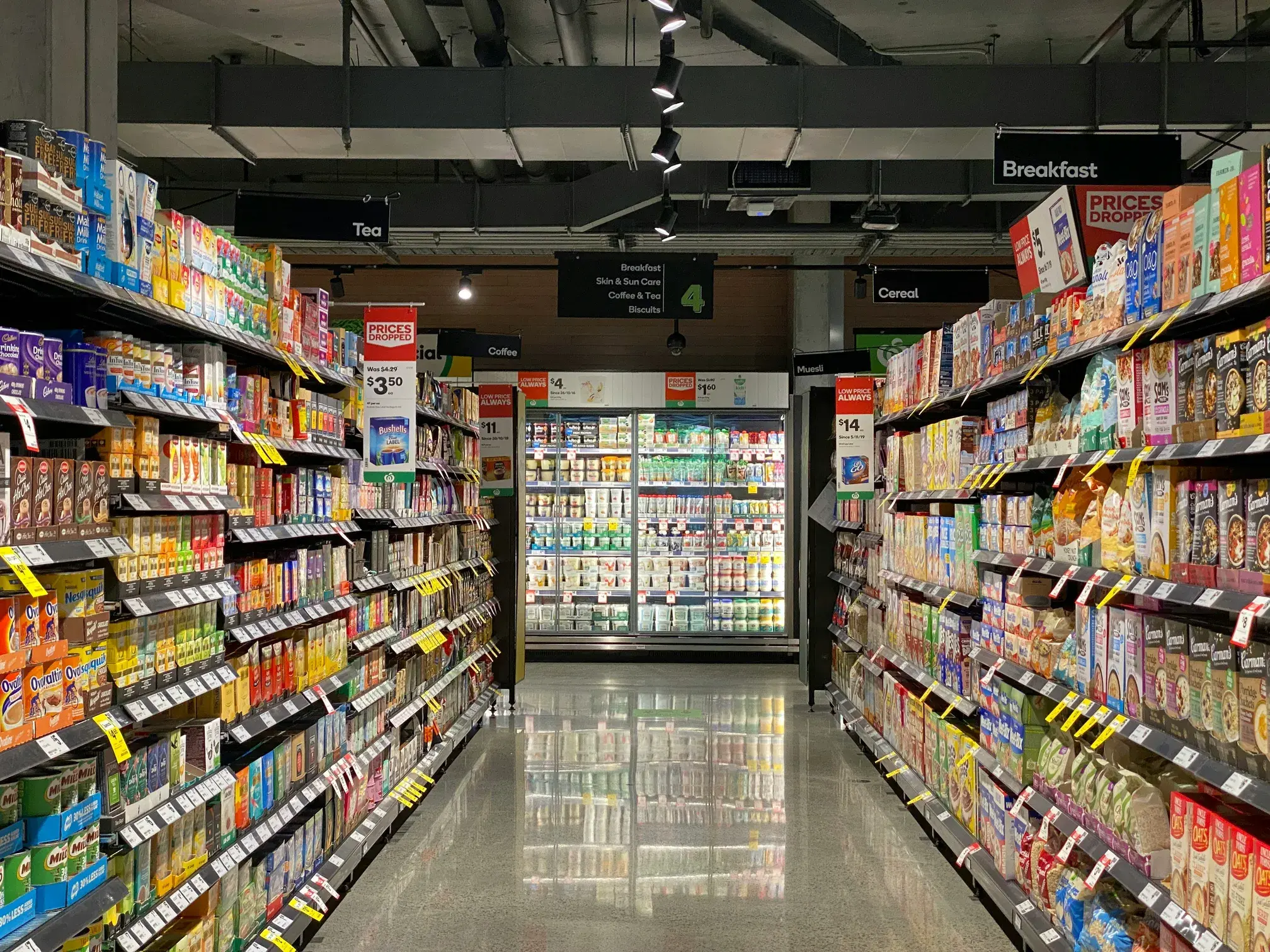
The short version. FMCG sells through habit and shelf reminders. A buyer at a kirana counter, a Reliance Smart aisle, a Big Bazaar, a Whole Foods, or a Costco does not Google before reaching for a packet. They reach for what is most familiar. OOH builds that familiarity at home, on commute, near the store. Daily impressions over years compound into shelf decisions. That is why HUL's Surf Excel, ITC's Aashirvaad, P&G's Tide, and Coca-Cola never stop running hoardings. Stopping would let a challenger close the gap.
This guide covers the category-vs-brand split, the festival calendar, distribution-tied rural OOH, the USA multinational pattern, and a worked ₹20 lakh summer beverage push for Chennai and Hyderabad.
Why FMCG is the steadiest OOH spender
Three structural reasons.
Habitual, low-consideration purchase. A FMCG product is bought in seconds at the shelf. The brain decision happens before the buyer enters the store. OOH plants the brand in that pre-decision background.
Distributed shelf, not destination. Unlike a car (showroom), a real estate project (site), or a movie (cinema), FMCG has no single shelf. The brand is on shelves in tens of thousands of stores. OOH is one of the few channels that reaches the buyer in the in-between space, on the commute, on the way to and from the store.
Long lifecycle, slow churn. A FMCG brand spends 30 years building category share. The OOH compounding makes sense over decades. Maggi's 40-year hoarding habit in India is not nostalgia, it is unit economics.
Category-level versus brand-level OOH
The split worth understanding.
Category-level OOH builds the category itself. Lifebuoy's "germs are everywhere" messaging in the 2000s did not push a specific SKU, it expanded the soap category. Surf Excel's "daag acche hain" expanded the cleaning category. Coca-Cola's "thanda matlab Coca-Cola" expanded the beverage occasion category. These campaigns ran on anchor hoardings year-round, building share for the brand by building the category.
Brand-level OOH pushes a specific SKU, variant, or offer. Maggi's "2 minute" creative on a Friday-evening hoarding. Lay's new American Cream Onion flavour. Coca-Cola's Sprite cucumber variant. Cadbury Celebrations Diwali pack. These spike around launches and festivals.
Most big FMCG brands run both layers. Category-level on anchor hoardings as the year-round base. Brand-level on the same hoardings during festival heavy ups, often with a creative refresh every 2 to 4 weeks.
The festival calendar in India
Diwali, Holi, Eid, Onam, Ganesh Chaturthi, Durga Puja, Christmas, and Pongal each drive specific category spends.
Diwali (October to November): confectionery, sweets, gifting, cleaning, paints, decor. Cadbury Celebrations, Ferrero Rocher, Haldiram's, Bikanervala, ITC, Mondelez, Asian Paints, and most personal-care brands run their largest OOH push of the year. Festival heavy ups can be 2 to 3 times base month spend.
Holi (March): beverages, snacks, colour, cleaning. Coca-Cola, Pepsi, Sprite, Thums Up, Maaza, Tropicana, Lay's, Kurkure, Bingo, Pringles all spike. Cleaning brands like Surf Excel, Tide, and Vim run post-Holi stain messaging.
Summer (April to July): beverages dominate. Coca-Cola, Pepsi, Sprite, Maaza, Tropicana, Frooti, Real, Slice, Mountain Dew, Kinley, Bisleri. AC and cooler brands enter heavily.
Onam (August to September): Kerala-specific spikes for everyone selling into Malayalam markets. Sweets, gifting, gold, garments.
Christmas (December): confectionery, gifting, alcohol surrogate brands. Smaller spike than Diwali but still meaningful.
Distribution-tied rural OOH
This is the layer outsiders rarely see. Indian FMCG brands run a heavy hoarding presence on national highways, state highways, and major trade arterials, particularly across UP, Bihar, MP, Rajasthan, Maharashtra, Karnataka, and Tamil Nadu rural corridors. The hoarding sits at the road the distributor's truck takes between the depot and the rural retailer.
The dual purpose: it reinforces brand for the end consumer at petrol pumps, dhabas, and bus stops, and it serves as a distribution signal to wholesalers and small retailers that the brand is being pushed.
Patanjali built much of its early visibility through this layer. Parle, ITC's Aashirvaad and Sunfeast, Britannia, Dabur, Marico, and Mother Dairy all use it aggressively. A typical rural-trade-route hoarding rents at ₹15,000 to ₹60,000 per month, far below metro rates, but the audience density on the highway is meaningful.
Modern trade and supermarket-adjacent OOH
In urban India, the hoarding 200 metres from a Reliance Smart, Big Bazaar, More Megastore, or DMart is one of the highest-ROI placements for FMCG. The buyer is literally about to walk into the store. Coca-Cola, PepsiCo, HUL, and ITC all book this inventory aggressively.
In the USA, the equivalent is the hoarding adjacent to Whole Foods, Costco, Trader Joe's, Target, and Kroger feeders. P&G, Unilever, Mondelez, and Kraft Heinz all run shelf-adjacent OOH. Programmatic DOOH inside grocery store networks (Walmart Connect, Albertsons Media) has added a digital layer that targets buyers literally in-store with a tilt toward CPG SKU promotion.
The USA multinational shift
After a decade of digital migration, US multinational FMCGs are tilting back toward OOH in 2026. P&G's CMO Marc Pritchard has publicly said household-level reach via OOH is now cheaper per qualified impression than household-level reach via fragmented digital. The structural reason: CTV and Meta cost inflation have pushed digital effective CPM above what it cost five years ago, while OOH effective CPM has been more stable.
P&G (Tide, Pampers, Gillette, Pantene, Crest, Olay), Unilever (Dove, Hellmann's, Ben & Jerry's, Vaseline), Mondelez (Oreo, Cadbury, Trident), Kraft Heinz, General Mills (Cheerios, Cinnamon Toast Crunch), and Mars (Snickers, M&M's, Skittles) all increased OOH allocations in 2024 and 2025. The growth has been particularly concentrated in programmatic DOOH for grocery-shelf-adjacent placements via Blip, Vistar Media, and Place Exchange.
Worked example: beverage brand summer push in Chennai and Hyderabad
Brand: a mid-tier Indian beverage challenger (think of a Frooti, Slice, or Real Fruit Juice positioning). Budget: ₹20 lakh across a 6-week April to mid-May summer push, split between Chennai and Hyderabad.
Spend plan:
- Two anchor hoardings, one each on Chennai OMR and Hyderabad HITEC City Outer Ring Road: ₹2,40,000 per month average across two boards, 1.5 months = ₹7,20,000.
- Six feeder hoardings (3 per city) on commute corridors: ₹70,000 per month average across six boards, 1.5 months = ₹6,30,000.
- Mall LED screens at four malls (Phoenix Velachery, Express Avenue, Inorbit Hyderabad, Forum Sujana): ₹35,000 per month per screen, 1.5 months = ₹2,10,000.
- 8 modern-trade-adjacent hoardings (at Reliance Smart and DMart approaches): ₹30,000 per month per board, 1.5 months = ₹3,60,000.
- Cinema slides at 25 screens for 3 weeks (peak summer holiday cinema attendance): ₹20,000 per screen per week, 3 weeks = ₹15,00,000. Too much, recalibrate to 8 screens for 2 weeks = ₹3,20,000.
Recheck total: ₹7,20,000 + ₹6,30,000 + ₹2,10,000 + ₹3,60,000 + ₹3,20,000 = ₹22,40,000. Trim feeder count from 6 to 4 boards: saves ₹2,10,000. Final ₹20,30,000.
Realistic ₹20 lakh shape:
- Two anchor hoardings (Chennai OMR, Hyderabad HITEC): ₹7,20,000.
- Four feeder hoardings (2 per city): ₹4,20,000.
- Four mall LEDs: ₹2,10,000.
- 6 modern-trade-adjacent hoardings: ₹2,70,000.
- 8 cinema screens for two weeks of summer holiday season: ₹3,20,000.
- Printing, monitoring, contingency: ₹60,000.
Total: ₹20,00,000.
Expected outcome: 28 to 45 lakh impressions across the two cities over six weeks, baseline category brand awareness lift of 6 to 11 points among 18-45 audience, modern-trade sales lift of 12 to 22 percent at the seven major chain accounts within 2 km of an anchor or feeder, and roughly ₹4 to ₹7 crore in incremental sales attributable to the campaign based on AdEx category coefficients.
This kind of stack also illustrates the ATL plus BTL plus TTL mix in practice (anchor hoardings as ATL, modern-trade-adjacent and cinema slides as BTL, mall LED programmatic as TTL), which is the same logic detailed in ATL BTL advertising strategies. For the per-asset rate sanity-check before you book, see the billboard cost India guide.
How FMCG OOH interacts with shopper marketing
FMCG OOH does not run alone. The classical stack:
OOH for top-of-mind shelf reminder. TV for emotional brand and category narrative. Digital for direct-to-consumer signups and e-commerce conversion. Shopper marketing (POS, end-aisle displays, in-store sampling) for the last 30 seconds before the shelf decision. Influencer for category education and trial generation.
The OOH layer is structurally the one closest to the store, in the literal sense of geography. Brands that get this right concentrate OOH spend in the 2 km radius of major modern trade stores and on commute routes feeding into them. Brands that get this wrong spread OOH thin across a city.
Common FMCG OOH mistakes
Switching off in non-festival months. Habit is built by always being there. Brands that go dark for a month lose share to competitors that stay. P&G, Unilever, and HUL never go fully dark for this reason.
Over-rotating on premium LED. LED is great for festival heavy ups, expensive for year-round category messaging. Static and backlit hoardings carry the year-round base efficiently. Save the LED budget for the heavy-up weeks.
Ignoring rural trade routes. For brands chasing rural growth (Patanjali, Parle, Dabur, Marico), the highway hoarding layer is often the highest-ROI piece in the plan. Brands that focus only on urban metros leave rural growth on the table.
Same creative for too long. A 12-month static hoarding becomes invisible. Refresh creative every 6 to 10 weeks at minimum. Festival heavy ups should always have fresh creative.
Not coordinating with shopper marketing. When in-store POS does not match OOH creative for the same week, the shelf conversion drops. The two layers need to synchronise.
The same QSR coordination logic applies to category neighbours like food chains, covered in OOH advertising for QSR and food chains.
Where AdTown fits
Browse year-round anchor hoardings, festival heavy-up inventory, modern-trade-adjacent boards, rural trade route hoardings, mall LEDs, and programmatic DOOH across India and the USA at /listings. The marketplace works for both the year-round base layer and the tactical festival heavy ups, and is particularly useful for the tier 2 and tier 3 trade route inventory that big-agency planning desks often miss. Free for advertisers and owners for the first six months while we launch.
FMCG is the category that built modern OOH. Its discipline of always being there is the most copyable insight any smaller brand can learn from. The brands that show up daily in physical space build the kind of category share that no algorithmic campaign produces in the same window.
See real prices in your city
Browse billboards, indoor screens, transit, cinema slots and more. Every listing shows the price, the location, and the photos upfront. No quotes, no salesperson.
Browse listingsFrequently asked questions
Because FMCG purchases are habitual, low-consideration, and shelf-decided. The hoarding does not need to drive a website visit, it needs to keep the brand top of mind so that the buyer reaches for it instinctively at the kirana counter or supermarket aisle. That logic does not have peaks and troughs the way real estate launches or movie releases do, so brands like HUL, ITC, Nestle India, Britannia, Coca-Cola, PepsiCo, P&G, and Unilever spend on OOH every month of the year, with festival and seasonal heavy ups on top of the base.
HUL spends an estimated ₹250 to ₹400 crore a year on OOH across its portfolio (Lifebuoy, Dove, Surf Excel, Lux, Lakme, Brooke Bond, Knorr). ITC's spend across Aashirvaad, Sunfeast, Bingo, and Classmate runs ₹150 to ₹250 crore. Nestle India (Maggi, Nescafe, KitKat) ₹120 to ₹200 crore. Coca-Cola India ₹180 to ₹280 crore. PepsiCo India ₹160 to ₹240 crore. Britannia, Parle, Dabur, Marico, and Patanjali each spend ₹50 to ₹120 crore. Combined the top 15 FMCG advertaisers in India spend close to ₹1,500 crore a year on OOH.
Category-level OOH educates the buyer on a product category (e.g. Lifebuoy's hygiene category messaging, Surf Excel's stain category messaging, Coca-Cola's beverage occasion messaging). Brand-level OOH pushes a specific SKU and offer (Maggi 70-second offer, Lay's new flavour launch, Cadbury Diwali pack). Category messaging tends to run year-round on anchor hoardings. Brand messaging tends to spike around launches, festivals, and promotional pushes. Most big FMCG brands run both, with category-level as the base and brand-level as the heavy ups.
Beverages and confectionery dominate Holi and summer. Confectionery, sweets, and gifting brands dominate Diwali. Coca-Cola, Pepsi, Sprite, Thums Up, Maaza, Tropicana, Frooti, Real, and Slice run major OOH during March to July (summer peak). Cadbury Celebrations, Ferrero Rocher, Haldiram's, Bikanervala, ITC, and Mondelez dominate Diwali October to November. Cleaning and personal care (Surf Excel, Tide, Vim, Lifebuoy) often run festival cleaning messaging. Total category spend during festival heavy ups can be 2 to 3 times the base month spend.
Through distribution-tied hoardings on national highways, state highways, and major trade arterials. The hoarding sits at the route the FMCG distributor's truck takes between the depot and the rural retailer. This dual-purpose visibility reinforces brand for the end consumer and serves as a distribution signal to retailers and wholesalers. Patanjali, Parle, Britannia, Marico (Parachute, Saffola), Dabur, and Mother Dairy run heavy hoarding layers on rural trade routes. ITC's Aashirvaad and Sunfeast specifically use this layer aggressively across UP, Bihar, MP, and Rajasthan.
Yes. After a decade of digital migration, multinational FMCGs are tilting spend back toward OOH as CTV and digital costs inflate. P&G (Tide, Pampers, Gillette), Unilever (Dove, Hellmann's, Ben & Jerry's), Mondelez (Oreo, Cadbury), Kraft Heinz, General Mills, and Mars all increased OOH allocations in 2024 and 2025. The structural reason is that household-level reach via OOH is now cheaper per qualified impression than household-level reach via fragmented digital. Programmatic DOOH adoption has accelerated this shift specifically for grocery-shelf-adjacent placements.