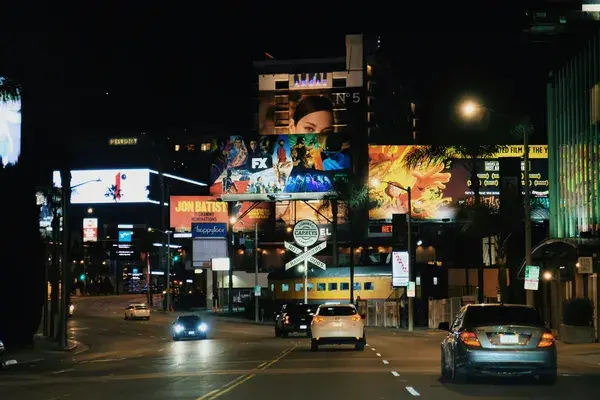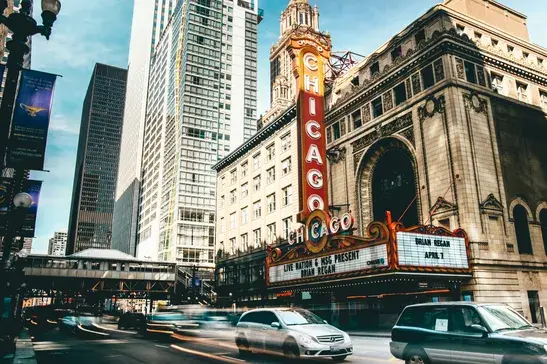

Billboard cost in Chicago in 2026 ranges from around $1,500 a month for a neighborhood static to $25,000+ for a four week premium Mag Mile screen. Kennedy, Eisenhower, and Dan Ryan freeway digitals run $3,500 to $15,000 for four weeks. Neighborhood static in Wicker Park, Logan Square, Lincoln Park, and Lakeview runs $1,500 to $4,000 a month. Suburban Evanston, Oak Park, Naperville, and Schaumburg run $1,500 to $3,500 a month. The Loop and Mag Mile sit at the top end. For the national spend and format numbers behind Chicago's market, the Out of Home Advertising Association of America (OAAA) is the industry source.
Chicago is the friendliest major market in the USA for SMB outdoor. Pricing is genuinely lower than the coasts, the city has more usable mid-tier inventory, and the neighborhood retail strips deliver real walk-in conversion. For SMBs and first-time advertisers, Chicago is closer to a tier-2 cost structure with tier-1 audience size.
Chicago billboard cost by zone
The Loop and Magnificent Mile
- Static and wallscapes: $8,000 to $20,000 for four weeks
- Premium digital: $15,000 to $25,000+
- Best for: retail, hospitality, tourism, premium F&B
River North, Streeterville, Gold Coast
- $4,000 to $10,000 for four weeks
- Best for: premium retail, healthcare, hospitality, real estate
Wicker Park, Bucktown, Logan Square
- Neighborhood static and digital: $1,800 to $4,500 a month
- Best for: D2C, F&B, fitness, lifestyle, local services
Lincoln Park, Lakeview, Wrigleyville
- $2,000 to $4,500 a month
- Best for: F&B, fitness, healthcare, retail, local services
Pilsen, Bridgeport, Hyde Park
- $1,500 to $3,500 a month
- Best for: local SMBs, F&B, education, family services
Freeway digitals (Kennedy, Eisenhower, Dan Ryan, Edens)
- $3,500 to $15,000 for four weeks
- Best for: any Chicago-wide campaign, automotive, healthcare networks, real estate
Suburbs (Evanston, Oak Park, Naperville, Skokie, Schaumburg)
- $1,500 to $3,500 a month
- Best for: family services, education, healthcare, real estate
Where Chicago inventory concentrates
- The Kennedy (I-90/I-94 north and west) the city's busiest commuter corridor
- The Eisenhower (I-290) west to the suburbs
- The Dan Ryan (I-90/I-94 south) south to the south suburbs
- The Edens (I-94) north to the North Shore
- Lake Shore Drive along the lakefront
- Michigan Avenue through the Mag Mile and the Loop
- Milwaukee Avenue through Wicker Park, Logan Square, Avondale
- Western Avenue north-south the length of the city
- Ashland Avenue north-south through the West Side
- Chicago Avenue, North Avenue, Fullerton, Belmont, Diversey, Irving Park the major east-west arterials
A real worked example, Chicago dental practice
Say you run a two-location dental practice with offices in Lincoln Park and Wicker Park. You want to push a cosmetic dentistry package and pediatric dentistry expansion. Budget: $9,000 over a twelve week cycle.
Format mix for Chicago SMB.
- One digital bulletin on the Kennedy near the Western or Damen exit for four weeks at around $4,500
- Three neighborhood static units near North Avenue, Fullerton, and Milwaukee Avenue intersections in the catchment for twelve weeks at around $3,200 total
- One smaller community-board format unit in Lincoln Park for twelve weeks at around $900
- Production, creative, vinyl, contingency at around $400
Expected outcome: 1.8 to 3 million impressions across twelve weeks, 250 to 500 enquiries (call, web, walk-in), and a measurable lift in pediatric and cosmetic consultations. Healthcare in Chicago has medium attribution, the twelve week neighborhood saturation builds the trust signal that single-format campaigns miss.
Why Chicago is a friendlier market than the coasts
Three reasons. Inventory supply is healthier per capita than NYC or LA. Local owners are often willing to negotiate cycle length discounts. The city's freeway and neighborhood structure means an SMB can get to meaningful frequency on a budget that would barely register in Manhattan or West Hollywood.
If you are a first-time advertaiser running your first outdoor campaign, Chicago is one of the best major markets to learn in.
Suburb-only campaigns
For SMBs in Evanston, Oak Park, Naperville, or Schaumburg, a suburb-only outdoor campaign is a legitimate play. Three to five static units across the local commuter routes plus a small freeway digital on the relevant Edens or Eisenhower exit gets you genuinely local frequency for under $4,000 a month.
For broader country context, the USA billboard cost guide sets Chicago against NYC, LA, Houston, Atlanta, and Detroit. If you are running a restaurant specifically, the restaurant local advertising guide is essential. And the Detroit billboard cost guide is the natural sibling read for Midwest market comparisons.
Booking your Chicago campaign on AdTown
AdTown lists Chicago inventory across the Loop, Mag Mile, neighborhood retail strips, freeway corridors, and suburbs. Every listing shows the rate, the location, the size, the visibility cone, and the owner. No agency in the middle, no markup. AdTown is free for the first six months for advertisers. Browse Chicago listings, compare three options on the corridor your customer actually drives, and lock the right slot.
See real prices in your city
Browse billboards, indoor screens, transit, cinema slots and more. Every listing shows the price, the location, and the photos upfront. No quotes, no salesperson.
Browse listingsFrequently asked questions
Mag Mile static and wallscape units run $8,000 to $20,000 for a four week cycle. Premium digital screens on the Mile or facing it can push to $25,000 plus. The Mile is good for premium retail, hospitality, and tourism-adjacent brands. For local Chicago SMBs, neighborhood static and freeway digitals usually outperform the Mile per dollar spent.
The Eisenhower (I-290) and the Dan Ryan (I-90/I-94 south of the Loop) tend to come in slightly cheaper than the Kennedy. Digital bulletins on these run $3,500 to $11,000 for four weeks. The Kennedy (I-90/94 north and west) carries the highest commuter density and tops out at $15,000 plus.
Yes, and Chicago is unusually good for them. Wicker Park, Logan Square, Lincoln Park, Bucktown, and Lakeview have walkable retail strips with usable static inventory. Standard neighborhood static runs $1,500 to $4,000 a month. For local SMBs, two well-placed neighborhood units plus a freeway digital is the classic Chicago stack.
Chicago is roughly 30 to 40 percent cheaper than NYC and 20 to 30 percent cheaper than LA at most tiers. The Loop and Mag Mile are the only zones approaching coast-level pricing. Freeway digitals, neighborhood static, and suburban inventory all come in friendlier. For SMBs and first-time advertaisers, Chicago is one of the best major-market value plays in the country.
Yes if your customer lives there. Evanston, Oak Park, Naperville, Skokie, and Schaumburg all have local static and digital inventory under $3,500 a month. Suburban audiences in Chicago skew family, professional, and stable, which is great for healthcare, real estate, education, and family F&B. Skip them only if your buyer is genuinely city-only.