
You've opened a restaurant. The food is good. The reviews trickle in. The dining room is half full on a Saturday. Now what.
Restaurant advertising at the local level comes down to one rule: the closer your media is to the front door, the better it converts. A hoarding two streets away beats a national TV ad. An auto rickshaw with your menu wrap beats a generic Instagram boost. Footfall is local, so your ads have to be local too.
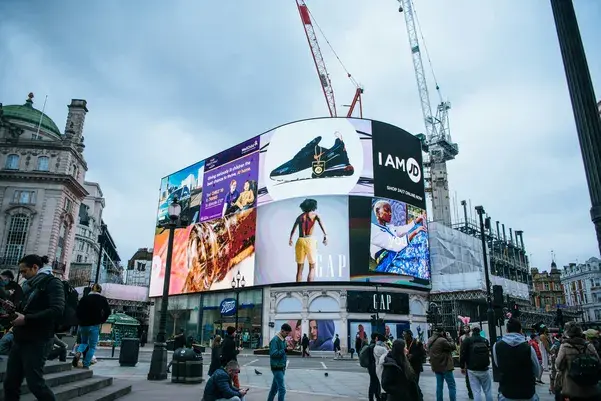
The four formats that consistently move the needle for neighbourhood restaurants, in rough order of ROI, are: hyper-local OOH within a 1.5 km radius, a strong Google Business Profile with reviews, targeted Meta ads with a 3 km radius cap, and food delivery app sponsored placements. Get those four right before you spend a rupee or a dollar on anything else. If hyper-local OOH is new to you, Out-of-home advertising explains the format family it belongs to.
Here's the playbook.
Format 1: Hyper-local OOH (highest ROI)
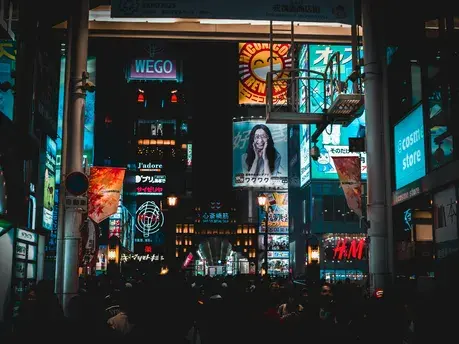
Hoardings, auto rickshaw hoods, mall LED screens, society notice boards, and pole signs near your restaurant. The whole point is geographic precision. You don't want to advertise to someone 30 km away who'll never drive over. You want to advertise to the person who walks past every evening.
In India, an auto rickshaw hood panel runs around ₹4,000 a month. A society notice board placement in a residential complex costs ₹3,000 to ₹8,000. A small hoarding on a feeder road can be ₹15,000 to ₹40,000 a month. A premium LED at a junction near you, much more.
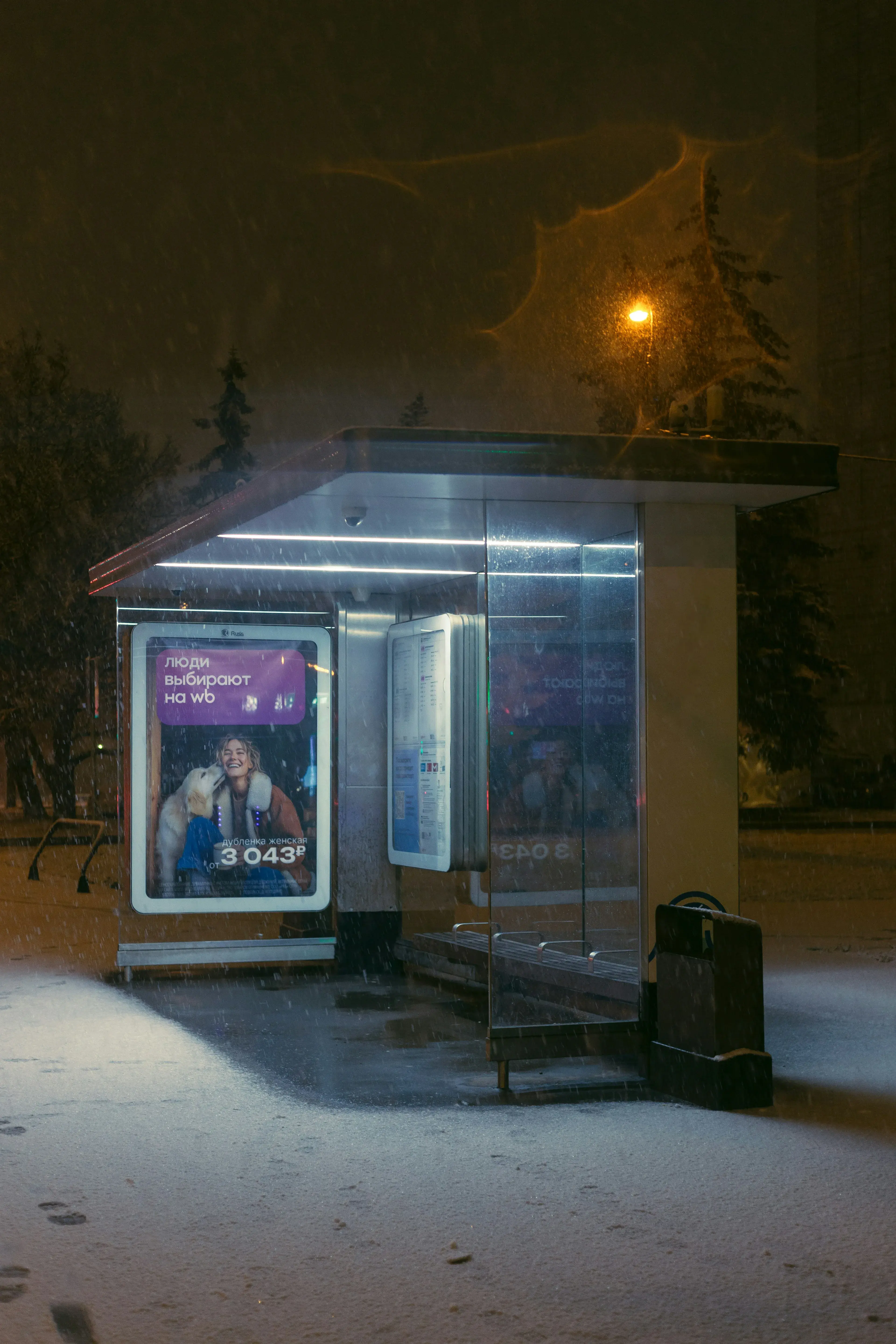
In the USA, neighborhood static posters run $250 to $800 a month. A digital screen in a strip mall parking lot or near a metro/transit stop is $400 to $1,500. Bus stop kiosks within walking distance of your restaurant sit in a similar range.
Look at what's available near you on /listings.
Format 2: Google Business Profile + reviews
Free, and most restaurants underuse it. Photos updated weekly, menu loaded in full, hours accurate, response to every review within 48 hours. Ask happy diners for reviews on the spot, not via email. Aim for 100+ reviews in your first six months.
This isn't paid advertaising but it directly affects whether the people seeing your hoarding actually convert when they Google you afterward. The two work together.
Format 3: Meta ads with a tight radius
Instagram and Facebook with a 3 km radius cap, demographic filter for your target diner, dynamic creative pulling your best food photos. Budget ₹300 to ₹500 a day in India or $15 to $25 a day in the USA. Don't boost organic posts, run proper campaigns through Ads Manager with a "drive store visits" or "messages" objective.
Meta is good at finding warm leads in your neighborhood. It's bad at building brand. Use it tactically.
Format 4: Delivery app sponsored placements
Zomato/Swiggy ads in India. DoorDash/UberEats sponsored listings in the USA. They raise orders within the app but don't drive footfall. Treat them as a delivery channel, not a brand channel. Spend roughly 10 to 15 percent of your overall ad budget here.
Sample 30-day budgets: India
₹15,000 (tight launch budget)
- Two auto rickshaw hood panels in your immediate area: ₹8,000
- Society notice boards in three nearby complexes: ₹4,000
- Meta ads (3 km radius): ₹3,000
That's pure neighborhood saturation. Every person within walking distance sees you multiple times.
₹30,000 (recommended launch budget)
- One feeder-road hoarding: ₹18,000
- Three auto rickshaw hoods: ₹12,000 (often bundled)
- Meta ads: free this month, redirect to OOH
₹60,000 (strong launch)
- Premium LED at nearest junction: ₹35,000
- Four auto rickshaws: ₹16,000
- Mall LED screen at the closest mall: ₹6,000
- Meta ads: ₹3,000
Sample 30-day budgets: USA
$200 (bare-bones test)
- $50 Blip test on nearby digital screens
- $100 Meta ads with tight radius
- $50 printed flyers for surrounding apartment buildings
$500 (a real launch)
- One neighborhood static poster: $300
- Meta ads: $150
- DoorDash sponsored: $50
$1,200 (proper launch)
- One digital bulletin on feeder road: $700
- Two static posters: $300
- Meta ads: $150
- DoorDash/UberEats sponsored: $50
Worked example 1: Dosa Pavilion, Indiranagar Bangalore
New South Indian place opening on 100ft Road. Target: regulars from the surrounding 2 km. Budget: ₹40,000 for launch month.
Plan:
- One small hoarding on the 80ft Road feeder, facing morning office traffic. ₹22,000.
- Three auto rickshaw hoods working the Indiranagar to Koramangala route. ₹12,000.
- Society notice boards in two big nearby complexes. ₹4,000.
- Meta ads with 2 km radius targeting tech professionals 25 to 45. ₹2,000.
Result expectation: a steady lift starting day 7, with weekend lunch covers up 40 to 60 percent over baseline by week 3. The hoarding builds the awareness, the autos reinforce it on commute, the Meta ads close the warm leads who Googled the name. Most diners cite "I keep seeing your name everywhere" as the trigger.
Worked example 2: Brick Yard Pizza, suburban Atlanta
New wood-fired pizza spot in Decatur. Target: families within a 15 minute drive. Budget: $1,200 for launch month.
Plan:
- One digital bulletin on Ponce de Leon Avenue feeder. $750 for four weeks, 1/8 rotation.
- Two static posters in nearby strip malls. $250.
- Meta ads with 5 mile radius, targeting parents 30 to 55. $150.
- DoorDash sponsored placement. $50.
Result expectation: dine-in covers up 30 to 50 percent in week 2 onwards, delivery orders up about 20 percent through DoorDash. By week 4 the regulars start identifying. The digital bulletin is the workhorse. The static posters add the "I see them everywhere" feeling.
Common mistakes
Spending the whole budget on Instagram. Instagram alone won't fill a dining room because it hits too many people who can't physically come.
Buying inventory too far away. A hoarding 8 km from your restaurant is a waste, no matter how cheap. Stay inside your delivery radius.
Trying to launch with no creative budget. Pay someone ₹5,000 or $200 to make decent photos and a hoarding design. A great location with bad creative is a wasted spend.
Underestimating week 1. Front-load. Open hot and let the buzz carry into a steady-state campaign.
Closing
Local restaurant advertising rewards specificity. The smaller your radius, the higher your ROI. Browse what's available within a kilometre or two of your kitchen on /listings and start there. If you're a chain operator running 20, 50, or 200 outlets and want the national playbook for QSR OOH instead of the single-location SMB version, OOH advertising for QSR and food chains covers it for chain operators. AdTown is free for the first six months while we launch, so you can list, browse, and book without a marketplace fee on top.
See real prices in your city
Browse billboards, indoor screens, transit, cinema slots and more. Every listing shows the price, the location, and the photos upfront. No quotes, no salesperson.
Browse listingsFrequently asked questions
Hyper-local OOH within a 1.5 km radius. A hoarding, auto rickshaw hood, or society notice board near the restaurant outperforms broad Instagram reach because it hits people who can actually walk in. The closer the medium is to the door, the higher the conversion. Combine it with a Google Business Profile and a launch-week offer and you've got the basics covered.
Plan for 5 to 10 percent of projected first-month revenue. For a small neighbourhood place that's typically ₹20,000 to ₹50,000 in India or $400 to $1,500 in the USA. Front-load it. Spend more in week one to drive launch traffic, then scale back to a steady maintenance budget once you have repeat customers.
Worth it for visibility on the app, not for brand building. Sponsored placement on Zomato, Swiggy, DoorDash and UberEats raises orders inside the app but doesn't bring people to the dining room. Use them as a supplementary channel, not the main one. The bulk of your budget should still go to local OOH and your own digital presence.
Send short, specific pitches to two or three local food writers and Instagram pages with a story angle, not a press release. New cuisine in the area, a chef with a notable background, an unusual ingredient. Free tasting invites work better than payment. Two strong features beat 50 generic mentions.
Yes if you pick local food micro-influencers (5,000 to 50,000 followers) in your actual city. They drive real foot traffic. Skip large influencers from other cities, the followers don't convert. Comp meals plus a small fee usually works. Track redemption with a code or unique dish.
Expect a noticeable lift in week two and a clearer pattern by week four. The first few days build awareness, the next two weeks convert. Don't judge a hoarding campaign on the first weekend. If after four weeks you're seeing no walk-ins citing the board or unfamiliar faces in the door, the location or creative needs work.